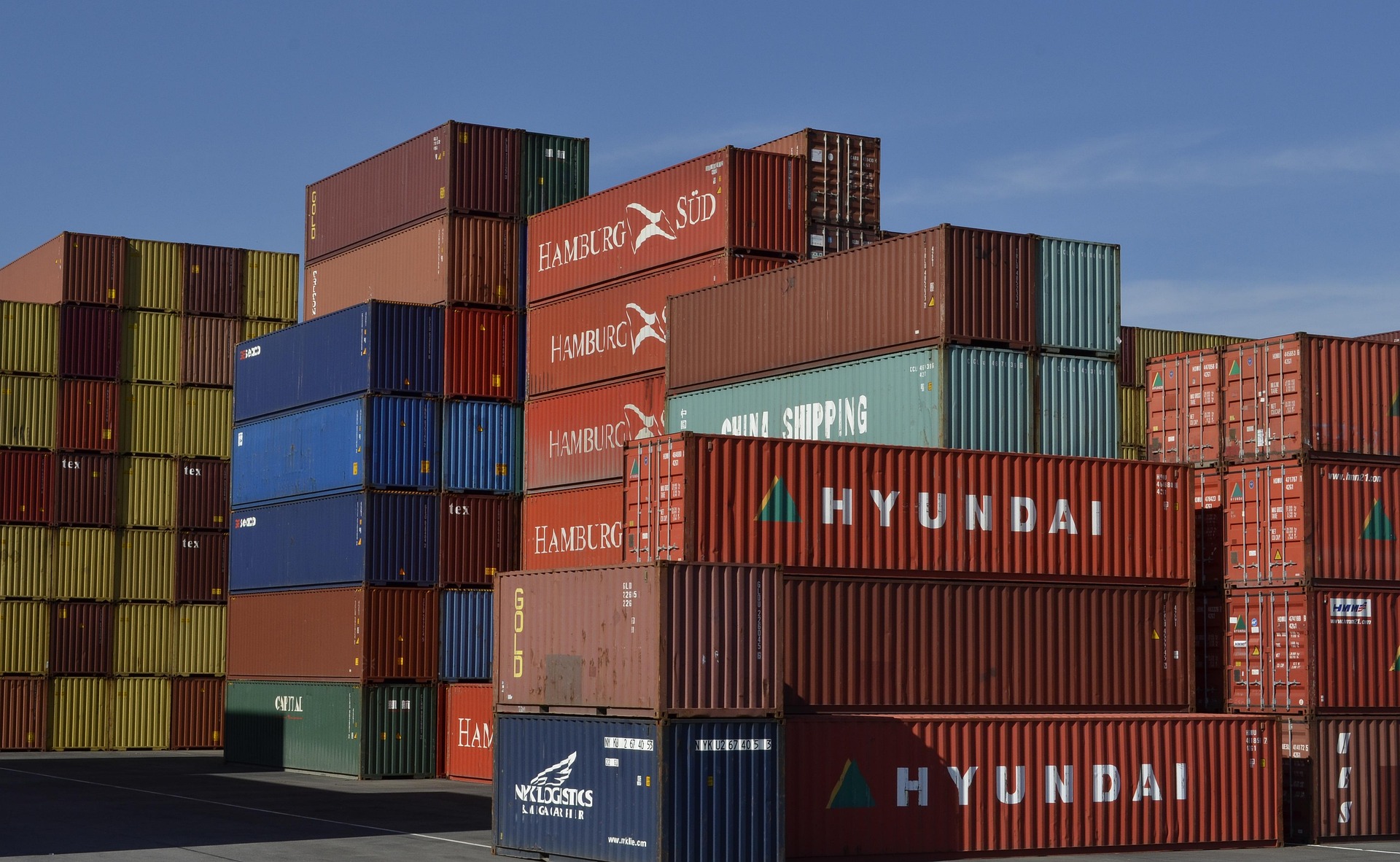
Buying products from an overseas supplier has become remarkably easy. A company can find a manufacturer online, negotiate prices over a video call and place an order without anyone from the purchasing team leaving the office. Getting those products from the factory to a warehouse thousands of kilometres away is another matter. International freight forwarding brings together carriers, terminals, customs processes and local transport so that cargo can move through several countries without the importer or exporter having to coordinate every stage independently. For businesses with regular international shipments, this coordination becomes an important part of keeping inventory available and customers supplied. https://www.arijus.lt/en/services/international-freight-forwarding-services
International freight forwarding is not limited to booking a container on a vessel or finding space on an aircraft. A single shipment can involve factory collection, road transport to a terminal, export procedures, the main international journey, destination handling and final delivery. If several transport modes are involved, schedules also need to line up reasonably well. One missed connection can turn what looked like a minor delay into several additional days of transit.
Freight forwarding connects separate parts of the journey
International transport is rarely performed by one company from beginning to end. A local haulier may collect the goods from the manufacturer, while an ocean carrier transports the container between ports. Another transport company then handles the inland journey at destination. Warehouses, terminals and customs specialists can become involved along the way.
The freight forwarder’s job is to organize these separate services into a transport solution. Depending on the agreement, the forwarder may arrange collection, book cargo space, coordinate documents, provide shipment updates and organize delivery after arrival.
This distinction is useful because freight forwarders and carriers are not the same thing. The company organizing an ocean shipment does not necessarily own the vessel carrying it. In many cases, its value comes precisely from being able to combine different carriers and transport options according to the customer’s requirements.
For the shipper, this can reduce the amount of daily coordination significantly. Instead of contacting several companies in different countries, there is a clearer point of contact for the shipment.
The best transport option depends on what is being shipped
There is no universal answer to whether goods should travel by sea, air, road or rail. The decision depends on cargo size, value, origin, destination and how urgently the products are needed.
Sea freight is widely used for larger international shipments. A container can carry substantial quantities at a cost per unit that often makes sense for consumer goods, industrial products and raw materials. The obvious disadvantage is time. Intercontinental ocean transport is measured in weeks rather than days, and port operations or transshipments can extend the total lead time further.
Air freight is almost the opposite. It can move goods across continents quickly but at a considerably higher cost. This makes it attractive for urgent components, valuable products, samples and smaller shipments where speed matters more than the lowest possible freight rate.
Road freight dominates many regional routes and remains essential for the first and final legs of intercontinental transport. Rail also has a role on suitable corridors. In practice, international supply chains regularly use several modes rather than choosing one exclusively.
Sometimes paying more for freight saves money
Transport departments are naturally expected to control costs, but the cheapest freight option is not always the cheapest business decision. The value of time depends heavily on what is inside the shipment.
Consider a manufacturer waiting for one component needed to keep a production line running. Sending it by sea may cost much less than air freight, but a production stoppage could cost far more than the difference in transportation price. In that situation, expensive freight can be the economical choice.
Retail creates similar examples. If summer inventory arrives at the end of August instead of June, the goods have technically been delivered, but their commercial value has changed considerably.
This is why experienced businesses tend to compare transport options against inventory requirements rather than freight rates alone. Slow and economical transportation works well when demand can be planned. Urgent replenishment requires a different calculation.
FCL or LCL? Shipment size changes the calculation
Sea freight does not require every importer to fill an entire container. Businesses with larger volumes often use Full Container Load, or FCL, while smaller shipments can travel as Less than Container Load, commonly abbreviated to LCL.
LCL allows cargo from several shippers to be consolidated into one container. A company importing a few pallets can therefore use ocean transport without paying for an entire container that would mostly be empty. This makes international sourcing practical even at relatively modest volumes.
The model also involves additional handling. Different shipments need to be consolidated and later separated, so transit and terminal processes may differ from a full-container movement.
As businesses grow, their preferred method can change. An online retailer might begin by importing a few cartons by air, move to LCL shipments as sales increase and eventually start receiving full containers. Logistics tends to evolve together with sales volume.
Documentation travels with the cargo
Containers and trucks receive most of the attention, but paperwork is just as capable of stopping a shipment. Commercial invoices, packing lists and transport documents provide information required at different stages of international trade. Depending on the goods and route, additional certificates, permits or other documents may also be necessary.
Small errors are surprisingly common. Product descriptions may be too vague, quantities can differ between documents, or consignee information may contain outdated details. When the cargo is still at the supplier’s warehouse, correcting such issues is usually straightforward. Once it has reached a terminal thousands of kilometres away, the same problem becomes more inconvenient.
Time differences make this particularly noticeable in global trade. A European importer may discover a missing detail just as the supplier in Asia finishes its working day. A question that takes five minutes to answer can suddenly take until tomorrow.
For this reason, document checks before departure are not unnecessary bureaucracy. They are part of keeping the physical shipment moving.
Customs needs to fit into the transport plan
When goods cross customs borders, transportation and customs procedures need to be coordinated. Information about the products, their value, origin and classification can become relevant, while particular categories may be subject to additional requirements.
Freight forwarding and customs brokerage are separate activities, although logistics companies often provide both services or work closely with customs specialists. For an importer, the advantage of coordination is fairly practical: the cargo should not reach a point in its journey where everybody is ready to move it except the customs process.
Problems sometimes begin much earlier, with the description supplied by the manufacturer. Terms such as “samples”, “parts” or “accessories” may be perfectly understandable between buyer and seller but insufficient for formal procedures. The importer then has to obtain more detailed information about the actual products.
Regular importers usually become much stricter with supplier paperwork over time. After a few delayed shipments, asking for the correct documents before departure starts to feel considerably less bureaucratic.
Incoterms can change the real price of a purchase
When a supplier quotes a price, buyers need to understand what exactly is included. The responsibility for transport does not automatically remain with one party throughout the journey.
Incoterms are used in international trade to establish important responsibilities between buyers and sellers. Depending on the agreed term, different parts of transportation, costs and risks can fall to different parties.
For businesses new to importing, this can create unexpected bills. A supplier’s offer may look particularly attractive because only part of the logistics chain is included. Once origin handling, freight, destination charges and inland transport are considered, the comparison with another supplier can look quite different.
A useful purchasing calculation therefore goes beyond the factory price. What matters commercially is often the landed cost – what the goods actually cost once they reach the place where the business can use or sell them.
Online commerce has made international freight less predictable
E-commerce businesses face an additional challenge: demand can move faster than traditional supply chains. A product can receive little attention for months and suddenly appear in a viral social media post. Stock that was expected to last six weeks disappears in six days.
The logistics team then has an uncomfortable choice. Waiting for the next regular sea shipment may mean losing sales, while replacing all inventory by air can destroy margins. One practical response is to split the replenishment. A smaller quantity travels quickly by air, while the majority follows by sea at a lower cost.
The opposite problem exists too. Businesses influenced by a temporary TikTok or Instagram trend can order too much stock just as consumer attention moves elsewhere. The container arrives on schedule, but the warehouse is now full of yesterday’s viral product.
Freight forwarding cannot predict consumer behaviour, but flexible transport planning can make sudden changes in demand easier to manage.
Tracking is useful, but communication matters more when something goes wrong
Businesses have become accustomed to shipment visibility. Tracking platforms can show important milestones and expected arrival information, giving purchasing and logistics teams a clearer view of cargo movements.
Yet an estimated arrival date remains an estimate. Ships encounter congestion and weather. Flights change. Containers can miss connections. Trucks get delayed. International logistics contains too many moving parts for every shipment to follow the original schedule perfectly.
The difference between a basic service and a strong forwarding relationship often appears during disruption. A customer does not simply need to know that the shipment is delayed. The useful information is why it happened, what the revised schedule looks like and whether an alternative is available.
A tracking screen can show a status. It cannot always tell a purchasing manager whether stock will arrive before Monday’s customer orders need to be dispatched.
Freight quotations need to be compared carefully
It is tempting to place several quotations next to each other and choose the lowest number. This works only when all offers cover essentially the same service.
One quotation may include collection from the supplier and delivery to the customer’s warehouse. Another may cover only the main international freight. Terminal charges, customs-related services or local transportation can be presented separately. Transit routes can differ as well.
The cheapest route may involve an additional transshipment and take longer. That does not make it a bad choice if the cargo is not urgent. The problem appears when the customer believes two offers are identical when they are not.
Before booking, businesses should understand the route, expected transit time, included services and likely additional charges. Five minutes spent checking the quotation can prevent a considerably longer argument when the final invoice arrives.
Choosing a freight forwarding partner
Price matters, but regular importers usually begin to value predictability just as much. A forwarder familiar with the customer’s usual routes, suppliers and products does not need to start from zero for every shipment.
Experience with the relevant trade lanes is useful because transport conditions differ between regions. Experience with the type of cargo matters too. Standard boxed consumer products create different operational questions from oversized industrial machinery or time-sensitive components.
Communication remains one of the less measurable but more important factors. During a normal shipment, there may be little to discuss. When the original vessel booking changes on a Friday afternoon, fast and clear communication suddenly becomes much more valuable.
Businesses should also consider whether they need only international transportation or a wider service including customs coordination, warehousing and final distribution. There is no universally correct model. The right one is the model that leaves as few unclear handovers as possible.
International freight is ultimately an inventory decision
It is easy to view freight forwarding as a task that begins after purchasing has already finished its work. Modern supply chains do not operate quite so neatly. Transport time influences how much inventory a business needs, when it needs to reorder and how much money remains tied up in goods travelling between continents.
Fast transportation can reduce lead times but increase freight costs. Slower transportation can improve unit economics while requiring better forecasting and larger inventory buffers. Neither approach is automatically better.
This is why international freight forwarding becomes more strategically important as trade volumes grow. A business that imports one shipment a year mainly needs to get that particular cargo delivered. A company receiving containers every week needs something different: a transport system that remains predictable enough for purchasing, warehousing and sales teams to plan around it. At that scale, freight forwarding is no longer simply about moving boxes across borders. It becomes part of how the business keeps products available without spending more on logistics and inventory than necessary.